Guinea Conakry
Company
Integrated processor at origin: we buy directly from cooperatives, process in Boke, and follow every lot through to the destination port.
Company
An integrated operator, at origin
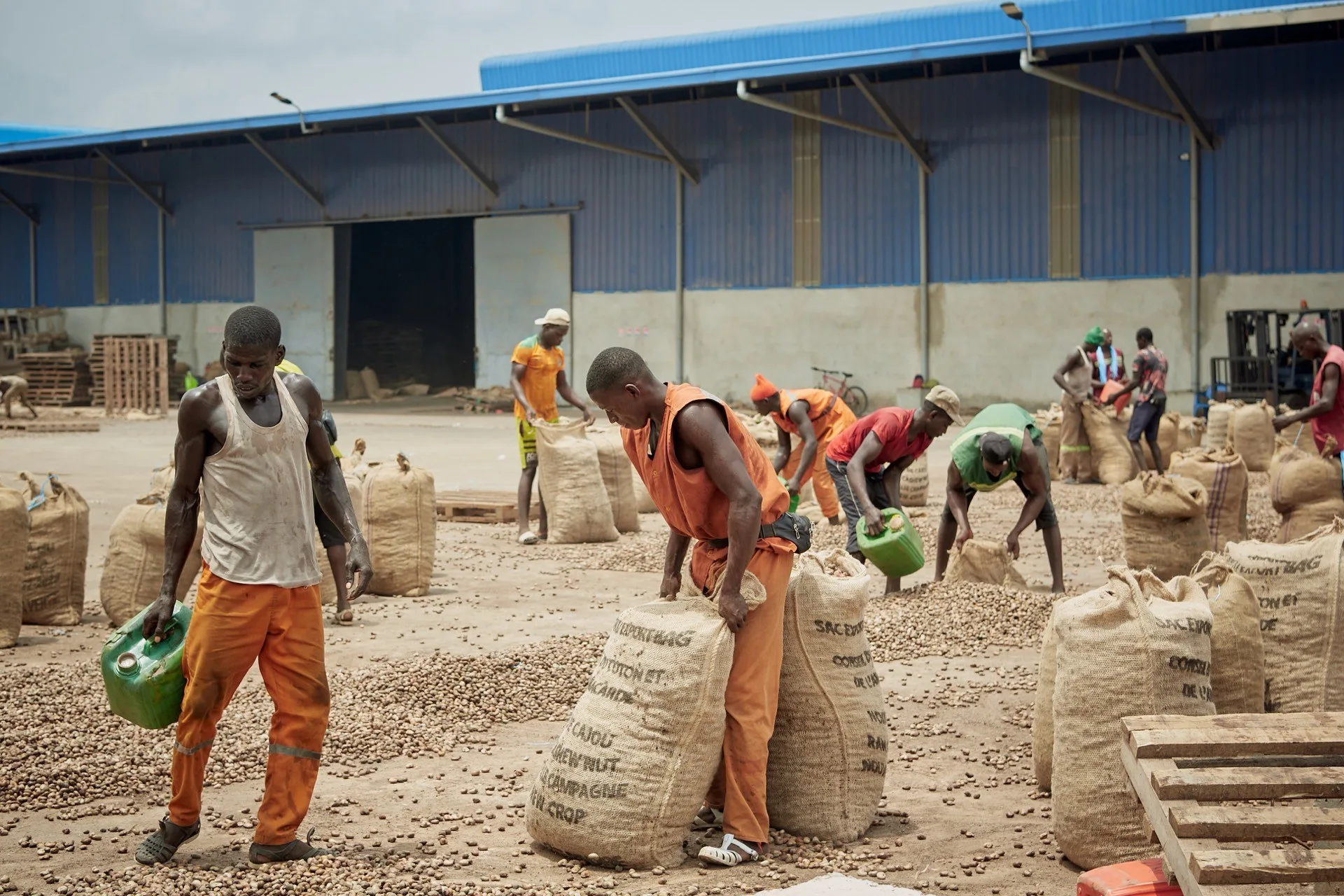
Most West African cashew leaves the continent unprocessed. The value is added somewhere else. SMGUINEE exists to reverse that: process in Guinea, employ in Guinea, export a finished product rather than a raw commodity.
Our Tamaransi facility in Boke handles 1,200 tonnes of raw nuts per year. We buy directly from cooperatives, process on site, and follow the shipment through to the destination port. Every lot carries a number that traces back to the field.
We also operate as a trader: buying and selling raw cashew at scale, bonded warehousing in Vietnam and India, and documentary facilitation for importers and exporters.
- Facility
- Tamaransi, Boke
- Country
- Guinea
- Core markets
- India, Vietnam, Europe
- Working languages
- French, English
Value chain
Six stages, one lot number
The number assigned at intake follows the lot all the way to the container. That is what makes traceability verifiable rather than declarative.
-
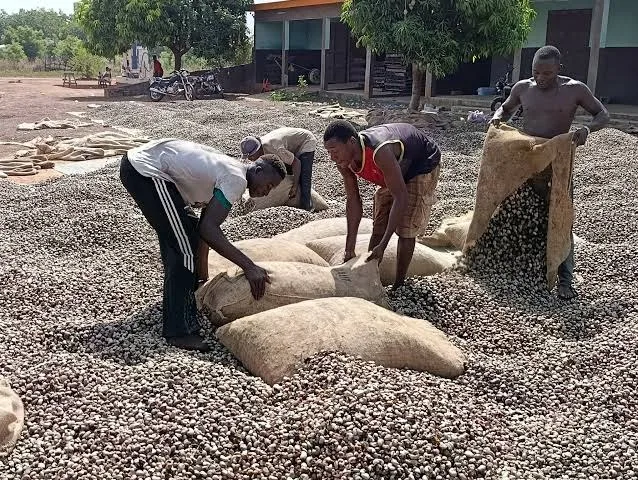
Cooperatives and collection
Direct purchase from over 50 partner cooperatives across Guinea. No middlemen: the farmer is identified, the plot is recorded, the price is transparent.
Output Raw nuts identified by origin
-
Intake and warehouse control
Every delivery is weighed, sampled and tested: KOR, count, moisture. The lot receives its traceability number at this stage. Out-of-spec lots are rejected or reclassified.
Output Lot number assigned
-
Storage
Ventilated storage, segregated by lot and origin. Moisture is re-checked periodically throughout the storage period.
Output Lots segregated and monitored
-
Processing
Steaming, shelling, drying, peeling, grading and hand sorting. Final sorting determines the grade: W180, W240 or W320. Installed capacity of 1,200 tonnes per year.
Output Graded white kernels
-
Vacuum packing
Vacuum-sealed 22.68 kg (50 lbs) bags, the international contract standard. Lot number and barcode applied before sealing.
Output 22.68 kg vacuum bags
-
Stuffing and shipment
Pre-shipment inspection, container stuffing, freight and port coordination, customs documentation. Shipment tracking through to destination.
Output Sealed, documented container
Impact
Processing at origin changes what stays in the country
80 %
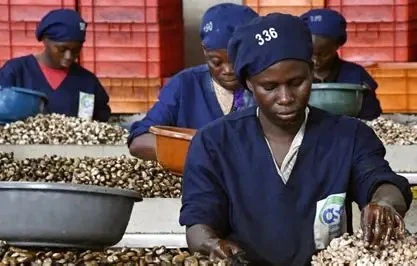
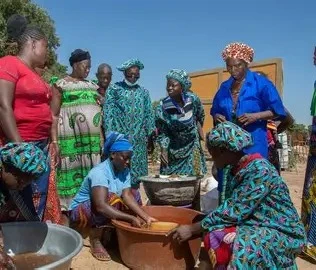
of the jobs at our site are held by women
They hold the station that determines the value of the lot: hand sorting and grading, which separates W180, W240 and W320. A skill acquired on site, and paid accordingly.
- Direct jobs
- 60
- Cooperatives
- 50+
- Site
- Boké
-
80 %
Of jobs held by women
Hand sorting and grading, the core of the craft, are carried out mainly by women trained on site. That is where the grade, and therefore the value of the lot, is decided.
-
50+
Partner cooperatives
Direct purchasing removes middlemen and improves the price received by the farmer. Each cooperative is identified and linked to the lots it supplied.
-
Local
Value added at origin
West Africa supplies close to half the global raw cashew crop, yet only a limited share is processed locally. Processing in Guinea keeps value in the producing country.
Let's talk about your requirement
Tell us the product, grade, volume and destination port. We reply within two business days.